

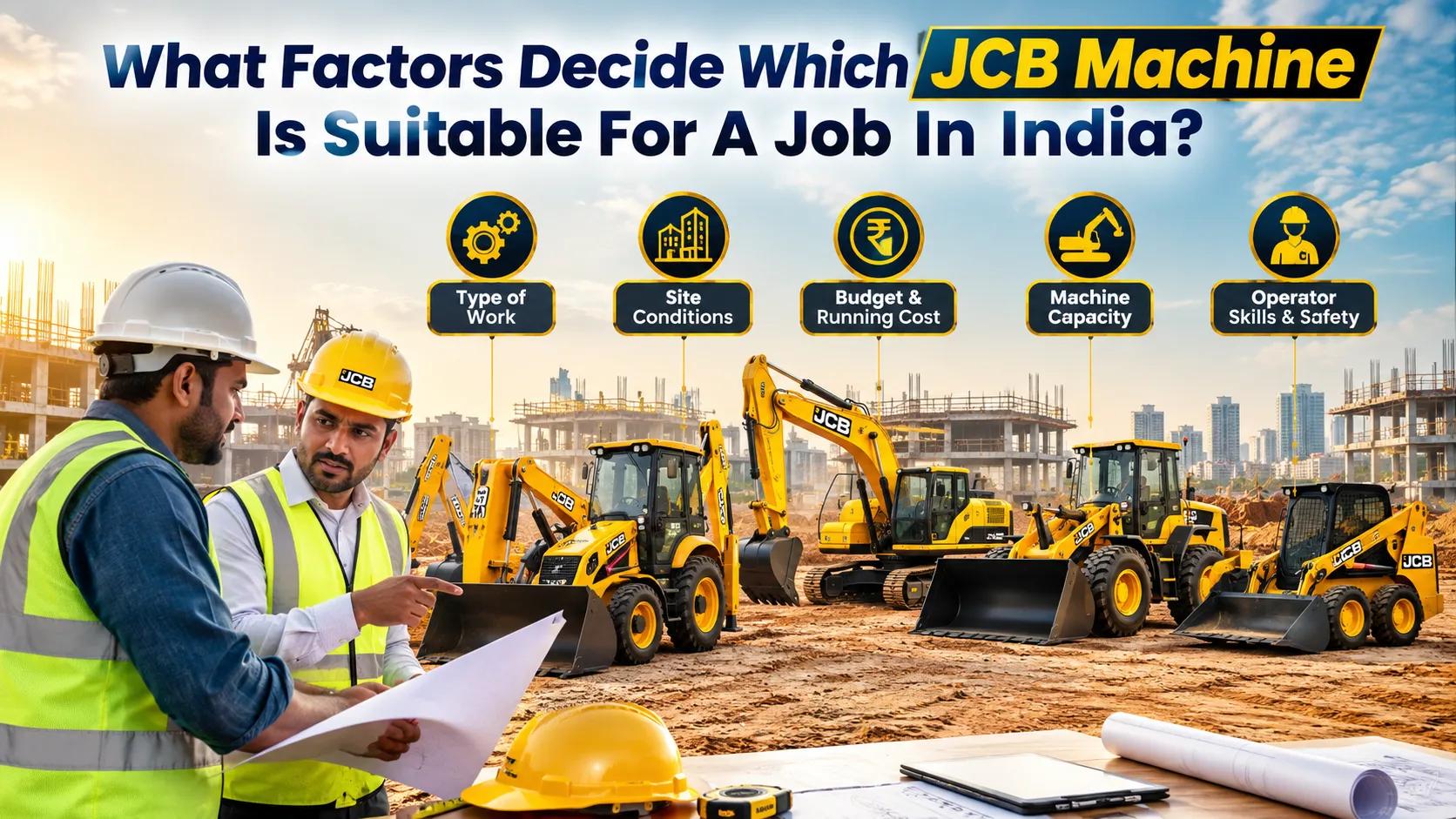
JCB machines come in different types and sizes.
Quick Overview
Match the machine type with your main project requirements.
Check soil conditions before selecting digging equipment.
Compare digging depth, reach, capacity, and working dimensions.
Consider site access, space, and ground conditions carefully.
Choose attachments based on the tasks planned for completion.
Check fuel use, maintenance, service, and operator requirements.
Are you confused about which JCB machine is right for your project in India? The correct choice depends on the type of work, site conditions, digging depth, load size, available space, and machine attachments.
JCB machines come in different types and sizes. A machine that works well on a road project may not suit a small construction site. These machines can be checked at JCB wheeled loader authorized dealers.
What Type of Work Will the JCB Machine Do?
The type of work is the first factor to consider. Different JCB machines handle different tasks.
A backhoe loader can suit general construction, digging, loading, trenching, and road work. An excavator can suit deeper digging and heavy earthwork.
Common applications include:
Digging foundations
Excavating soil
Loading loose material
Road construction
Trench digging
Land clearing
Material handling
Demolition work
Agricultural work
Quarry and mining tasks
How Does Job Size Affect JCB Machine Selection?
The size of the project directly affects the machine you need. A small residential project may not require the same equipment as a large highway project.
Consider these factors:
Total work area
Expected work volume
Daily working hours
Required digging depth
Material type
Required lifting capacity
Project deadline
Does Soil Type Affect Which JCB Machine You Need?
Yes, soil type can affect machine selection. Different ground conditions require different digging power, bucket types, and machine sizes.
Loose soil usually requires less digging force than hard or compacted ground. Rocky ground may require specialized attachments or a machine designed for heavier excavation.
Before selecting a machine, check the site conditions.
How Important Are Digging Depth and Reach?
Digging depth and reach matter when the job involves trenches, foundations, drainage work, or deep excavation.
The machine must reach the required depth without creating unnecessary safety or performance problems. You should also check the arm reach because the required working distance can vary from one project to another.
Check these specifications before selecting a machine:
Maximum digging depth
Maximum reach
Dump height
Bucket capacity
Arm and boom dimensions
Working radius
How Does Site Size Influence the Choice?
Available working space can strongly influence machine selection. A large machine may struggle to work efficiently in a narrow location.
Check the following before bringing a machine to the site:
Entry gate width
Road access
Turning space
Overhead clearance
Working area
Nearby buildings
Underground utilities
Do Attachments Change Which JCB Machine You Should Choose?
Yes. Attachments can change what a machine can do. The right attachment can make one machine suitable for different tasks.
Common attachments include:
Different bucket types
Hydraulic breakers
Forks
Augers
Grapples
Trenching tools
Compaction attachments
How Does Machine Capacity Affect Performance?
Machine capacity should match the material and workload. Choosing too small a machine can slow down the project. Choosing a machine that is far larger than required can create unnecessary operating costs.
Look at specifications such as:
Engine power
Operating weight
Bucket capacity
Lifting capacity
Hydraulic performance
Digging force
Loading height
How Do Fuel Use and Operating Costs Matter?
Fuel use is another factor when choosing construction equipment in India. A machine that works for several hours each day can consume significant fuel over the project period.
You should look at more than the machine's purchase price. Consider fuel use, routine maintenance, operator requirements, spare parts, and service access.
A practical comparison should include:
Expected daily working hours
Fuel consumption
Service intervals
Maintenance requirements
Availability of parts
Local service support
Operator availability
Does the Operator's Skill Level Matter?
Yes. Machine performance also depends on the operator. A skilled operator can use the equipment correctly and follow safe working practices.
The operator should understand:
Machine controls
Load limits
Attachment use
Safe digging practices
Site hazards
Daily machine checks
How Should You Choose the Right JCB Machine for Your Job?
Start with the job requirements instead of starting with a machine model. Write down the work you need to complete and the conditions at the site.
Then compare machines against those requirements.
Identify the main task.
Check the site size and access.
Assess the soil and ground condition.
Decide the required digging depth and reach.
Estimate material volume and load size.
Check suitable attachments.
Compare machine specifications.
Consider fuel and service requirements.
Confirm operator availability.
Select the machine that fits the complete job.
What Mistakes Should You Avoid When Selecting a JCB Machine?
Choosing equipment based only on size or engine power can create problems. A bigger machine does not automatically suit every project.
Avoid selecting equipment without checking site access. Also avoid ignoring ground conditions, attachment requirements, or required digging depth.
Another common mistake involves focusing only on upfront cost. Running hours, fuel use, maintenance, and service access also affect the overall cost of using a machine.
Summing Up
The right JCB machine depends on the job, site conditions, machine capacity, digging requirements, attachments, and working space. You should also ask about fuel use, maintenance, operator skills, and service support from experts of JCB compactor showroom. Start with your project needs, then compare suitable machines.
FAQS
How do I know which JCB machine is right for my job?
Start with the type of work you need to do. Check the required digging depth, load size, site space, soil condition, and machine capacity. These factors can help you choose a suitable JCB machine.
Is a bigger JCB machine always better for heavy work?
No. A larger machine may offer more power, but it may not suit every site. Check the work area, access space, ground conditions, and required capacity before choosing a larger JCB machine.
Can the soil type affect JCB machine selection?
Yes. Soft soil, hard soil, clay, and rocky ground can require different digging performance and attachments. Check the ground condition before selecting the machine and bucket type.
Do JCB attachments affect machine selection?
Yes. Attachments can change the type of work a machine can handle. Buckets, breakers, forks, and other tools have different requirements. Always check attachment compatibility before using one.
Should I consider fuel and maintenance costs before choosing a JCB?
Yes. Look beyond the initial machine cost. Check fuel use, service needs, spare parts, operator availability, and local service support. These costs can affect your total project expenses.